

A Beginner’s Guide to Keeping Pet Fish
Everything You Need to Know Before Bringing Fish Home (Especially for Indian Homes)
Keeping pet fish is often seen as one of the easiest ways to start your pet parenting journey. In many Indian households, a small fish tank placed in the living room or near the entrance is believed to bring positivity, calmness, and beauty to the space. However, while fish may look simple to care for, successful fishkeeping actually depends on understanding their environment, habits, and daily needs.
This beginner’s guide is written for anyone who is planning to keep pet fish for the first time whether you live in an apartment, an independent house, or a rented home. It will help you understand how to care for fish properly, avoid common mistakes, and create a peaceful aquarium that works well in Indian conditions first, and globally as well.
Why Fish Make Wonderful Pets
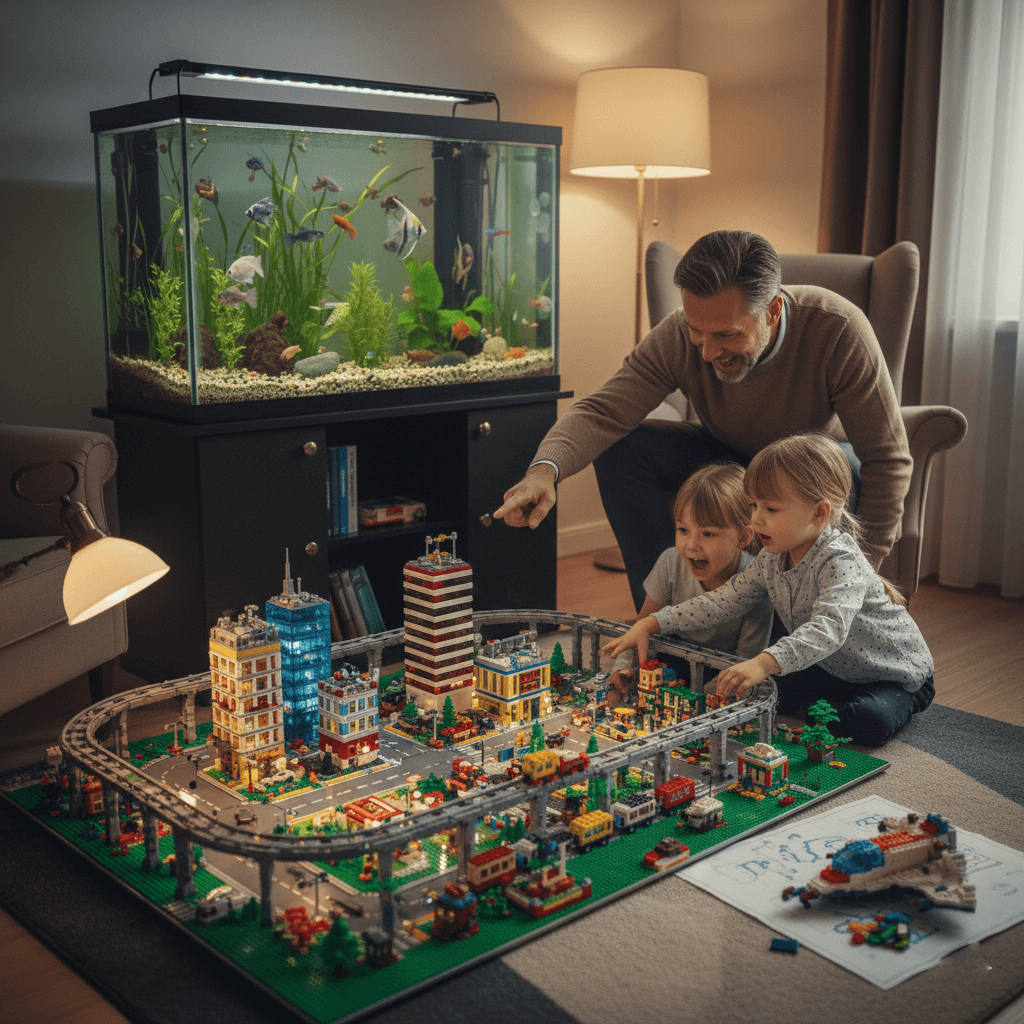
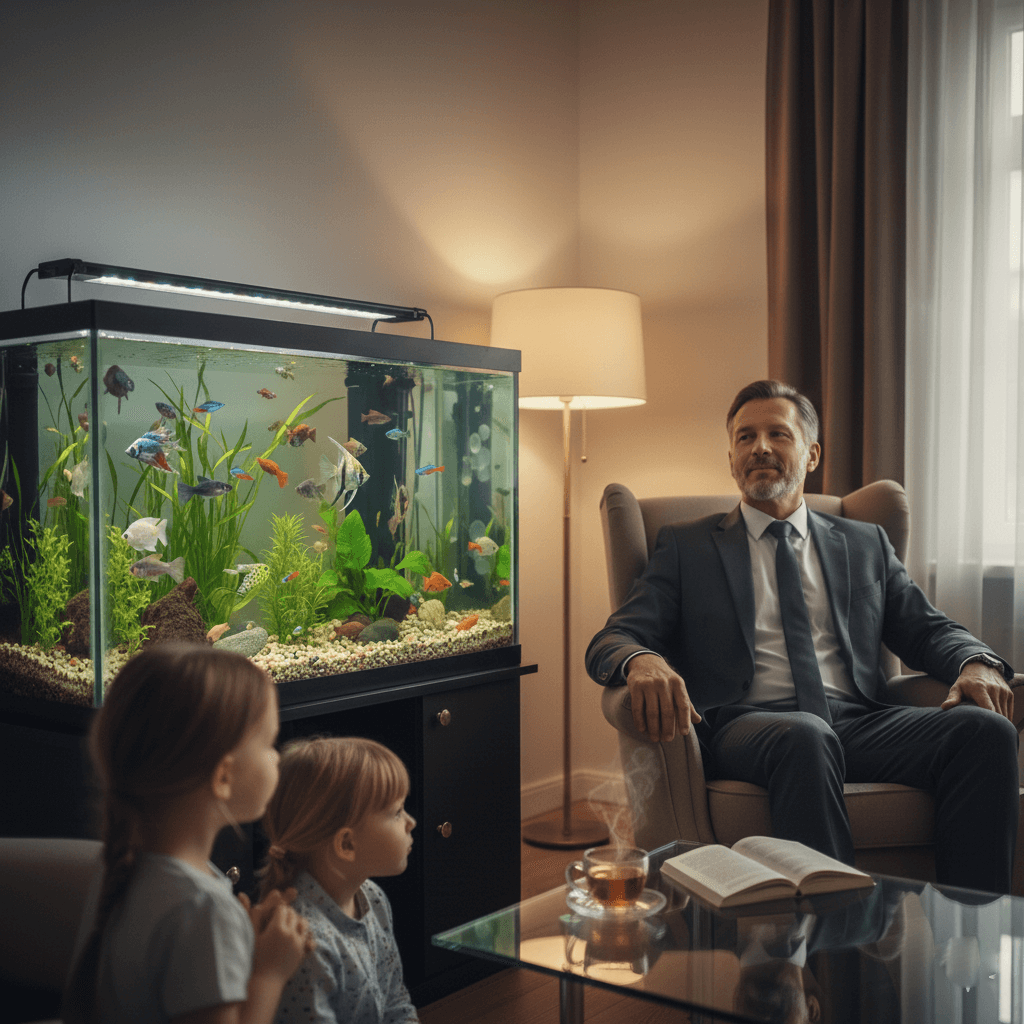
Fish are quiet, calming, and incredibly fascinating to watch. For many people, observing fish swim slowly in clean water helps reduce stress after a long day. Unlike other pets, fish do not require walking, training, or constant physical interaction, which makes them suitable for busy professionals, elderly family members, and families with children.
- Am I ready for this?
- What if I mess something up?
- Why is this tiny creature staring at me like I owe them rent?
In Indian homes especially, fish are often chosen because:
- They do not take up much space
- They are allowed in most rented homes
- They are affordable compared to other pets
- They require less direct handling
However, what many beginners don’t realise is that fish are highly sensitive to their surroundings, and their health depends almost entirely on how well their environment is maintained.
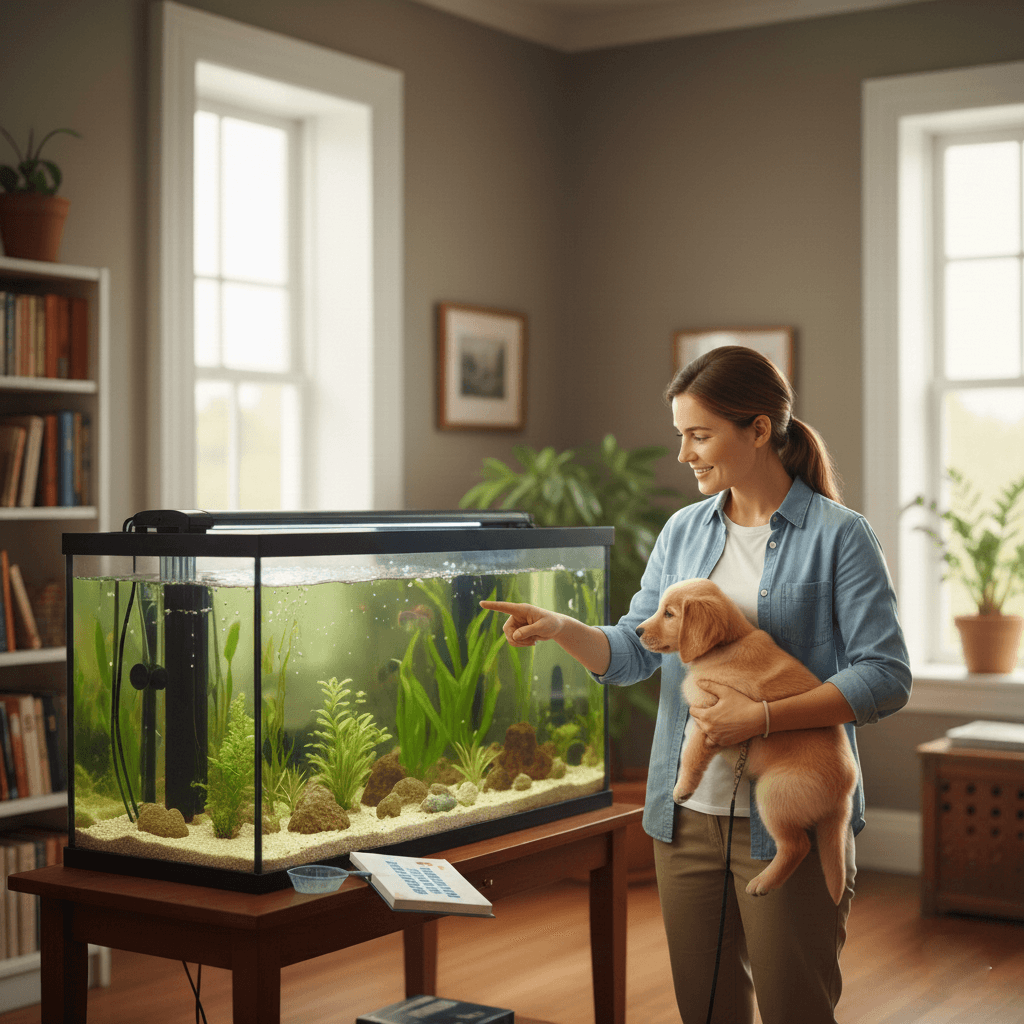
Choosing the Right Fish Tank for Your Home
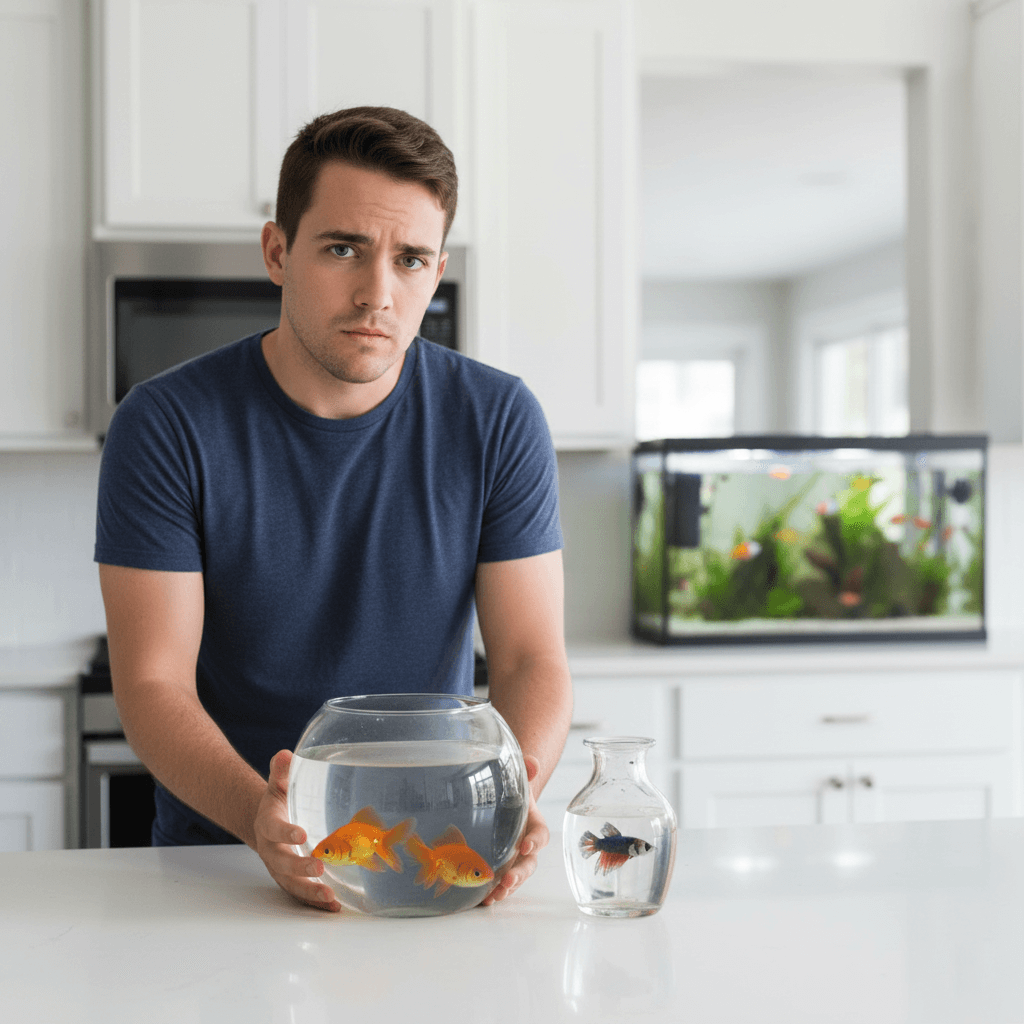
One of the most common beginner mistakes is choosing a very small bowl or decorative glass container. While these may look attractive, they are not suitable for keeping fish healthy in the long run.
In Indian homes especially, fish are often chosen because:
Things to consider before buying a tank:
- Bigger tanks are easier to maintain than tiny ones
- Small bowls get dirty very quickly
- Temperature and water quality remain more stable in larger tanks
For beginners, a 10 to 20 litre glass aquarium is a good starting point. It fits easily into most Indian homes, requires manageable maintenance, and gives fish enough space to swim comfortably.
It is also important to place the tank:
- Away from direct sunlight
- Away from kitchens (due to heat and oil vapours)
- In a quiet area with minimal disturbance
Water Quality: The Heart of Fishkeeping
Fish live, breathe, and eat in water — so water quality directly affects their survival. In India, tap water usually contains chlorine, which is harmful to fish if used directly.
Before adding fish:
- Always use treated or dechlorinated water
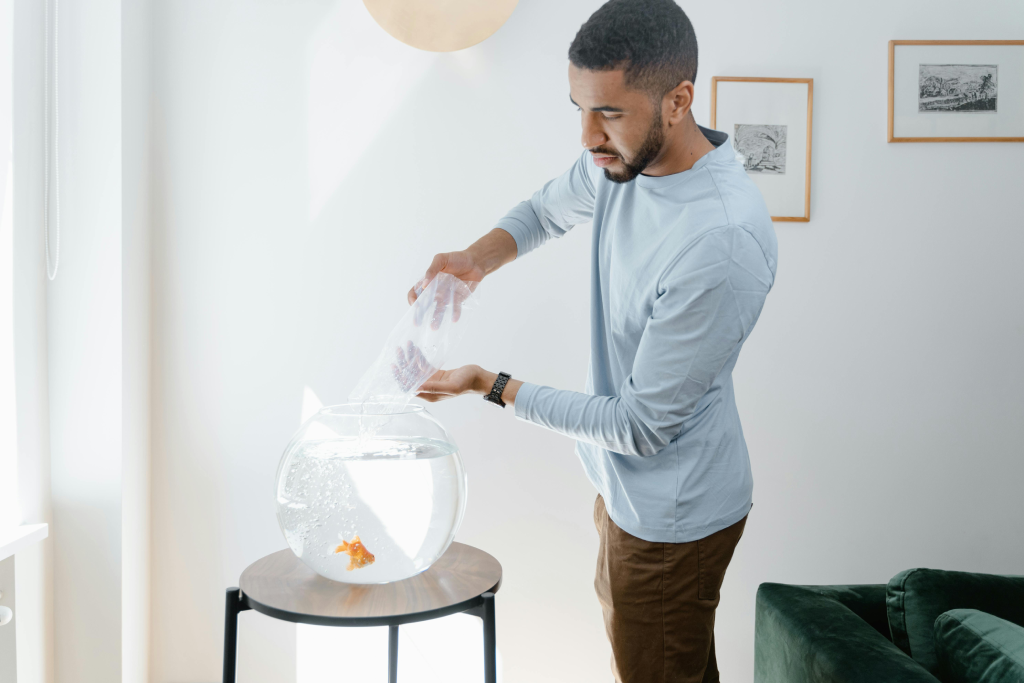
- Never add fish immediately after filling the tank
- Let the water settle for some time
Changing all the water at once can shock fish and should be avoided. Instead, partial water changes are safer and more effective
Freshwater Fish vs Saltwater Fish
For first-time fish parents, freshwater fish are strongly recommended.
Freshwater fish are:
- Easier to care for
- More forgiving of small mistakes
- Affordable and easily available in India
Saltwater aquariums require advanced equipment, regular monitoring, and higher costs, which makes them unsuitable for beginners.
Feeding Fish the Right Way
Feeding may seem simple, but overfeeding is one of the biggest causes of fish problems.
Many beginners believe fish need food multiple times a day, but this is not true.
Basic feeding guidelines:
- Feed once or twice daily
- Only give food that fish finish within 2–3 minutes
- Remove uneaten food if visible
Excess food settles at the bottom of the tank, pollutes the water, and affects fish health. When in doubt, feeding less is always safer than feeding more.
Cleaning and Maintaining the Aquarium
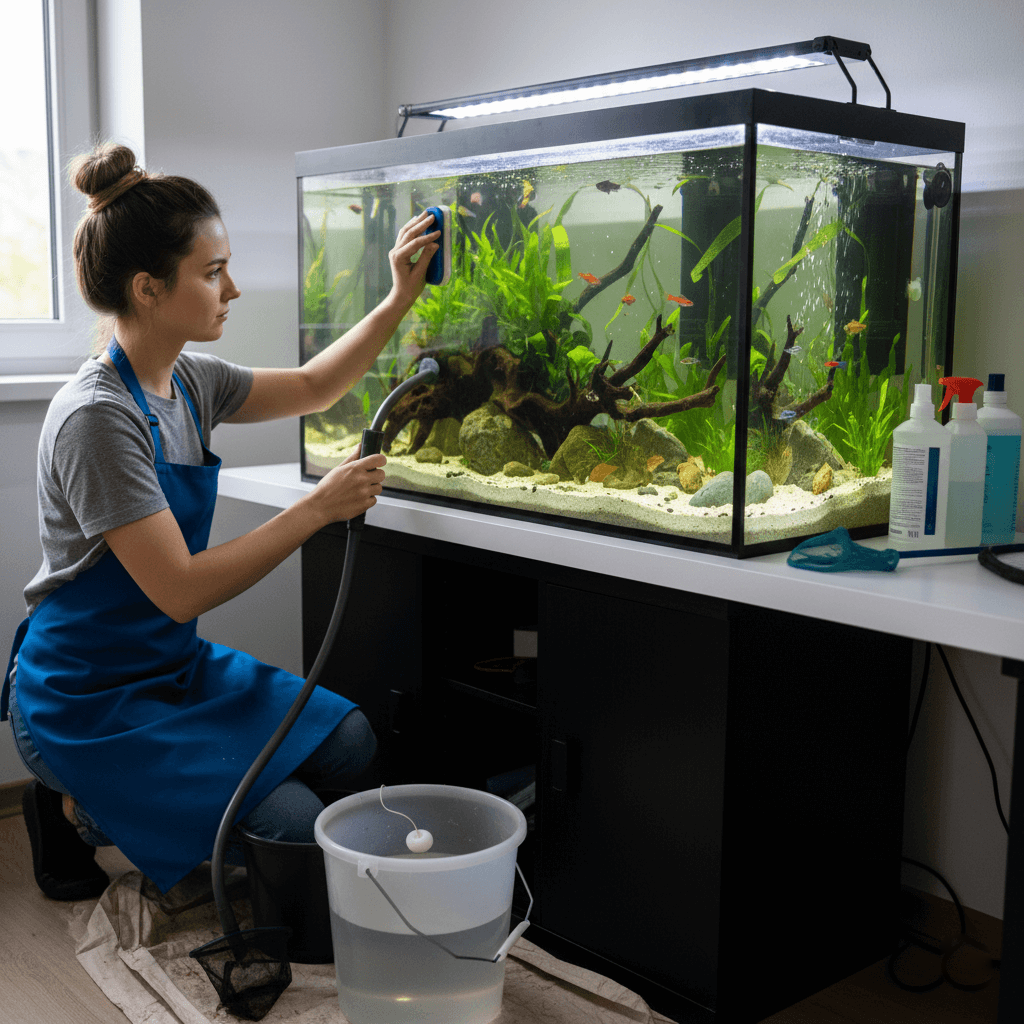
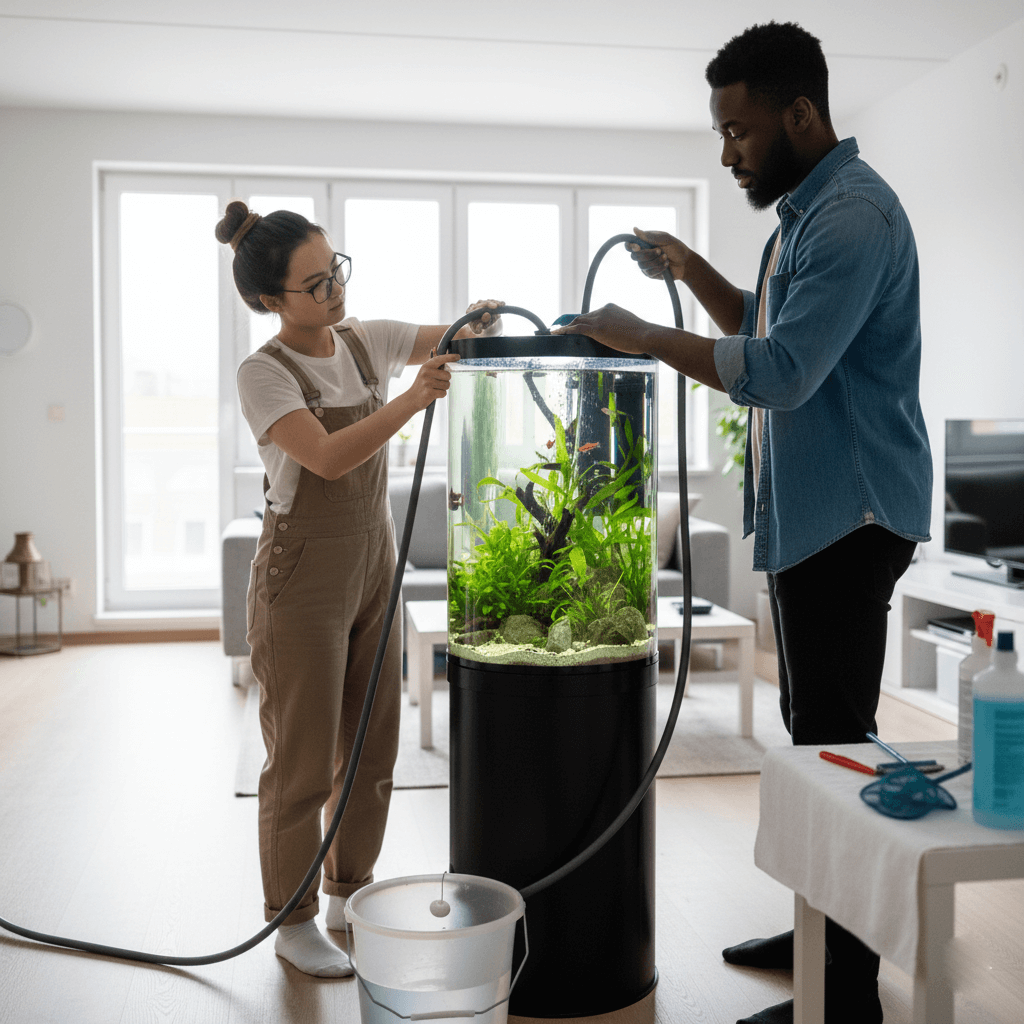
A clean aquarium does not mean changing water every day. In fact, too much cleaning can disturb the balance of the tank.
A simple weekly routine:
- Change 20–30% of the water once a week
- Clean algae gently from glass walls
- Rinse filters using tank water, not tap water
Indian homes often face power cuts, so it’s important to:
- Avoid overstocking fish
- Keep the tank in a stable temperature area
- Resume filtration gently after power returns
Understanding Fish Behaviour
Fish communicate through their movement and behaviour. Learning to observe them calmly can help you understand when something is wrong.
Normal behaviour includes::
- Steady swimming
- Exploring plants or decorations
- Resting quietly at times
Signs to observe carefully:
- Fish staying at the surface
- Constant hiding
- Sudden colour fading
- Unusual or erratic swimming
Observation is key panic is not helpful.
Plants, Decor & Environment
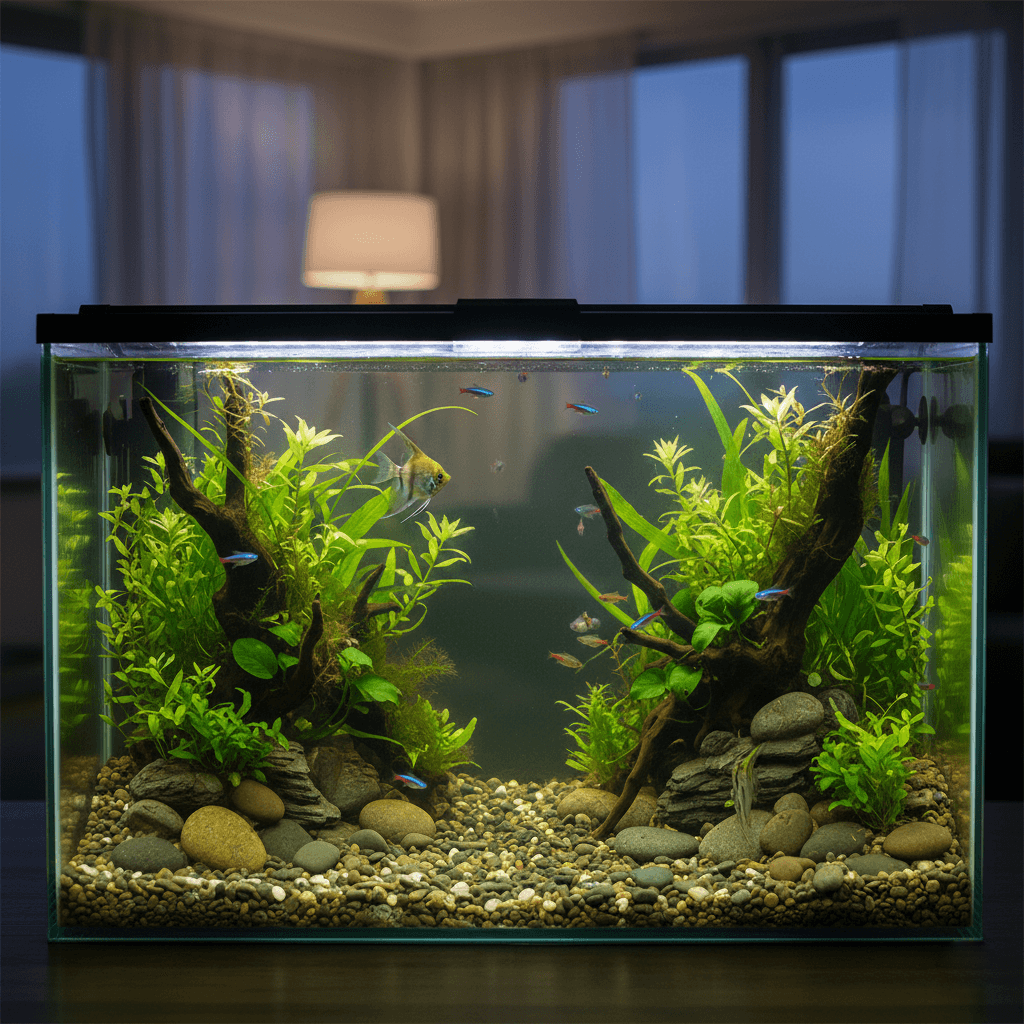
A well-designed aquarium is not just decorative; it directly affects fish comfort.
- Plants provide shelter and reduce stress
- Smooth stones and decorations prevent injuries
- Overcrowding decorations should be avoided
A natural-looking tank usually leads to calmer, healthier fish.
Are Fish Truly Low Maintenance Pets?
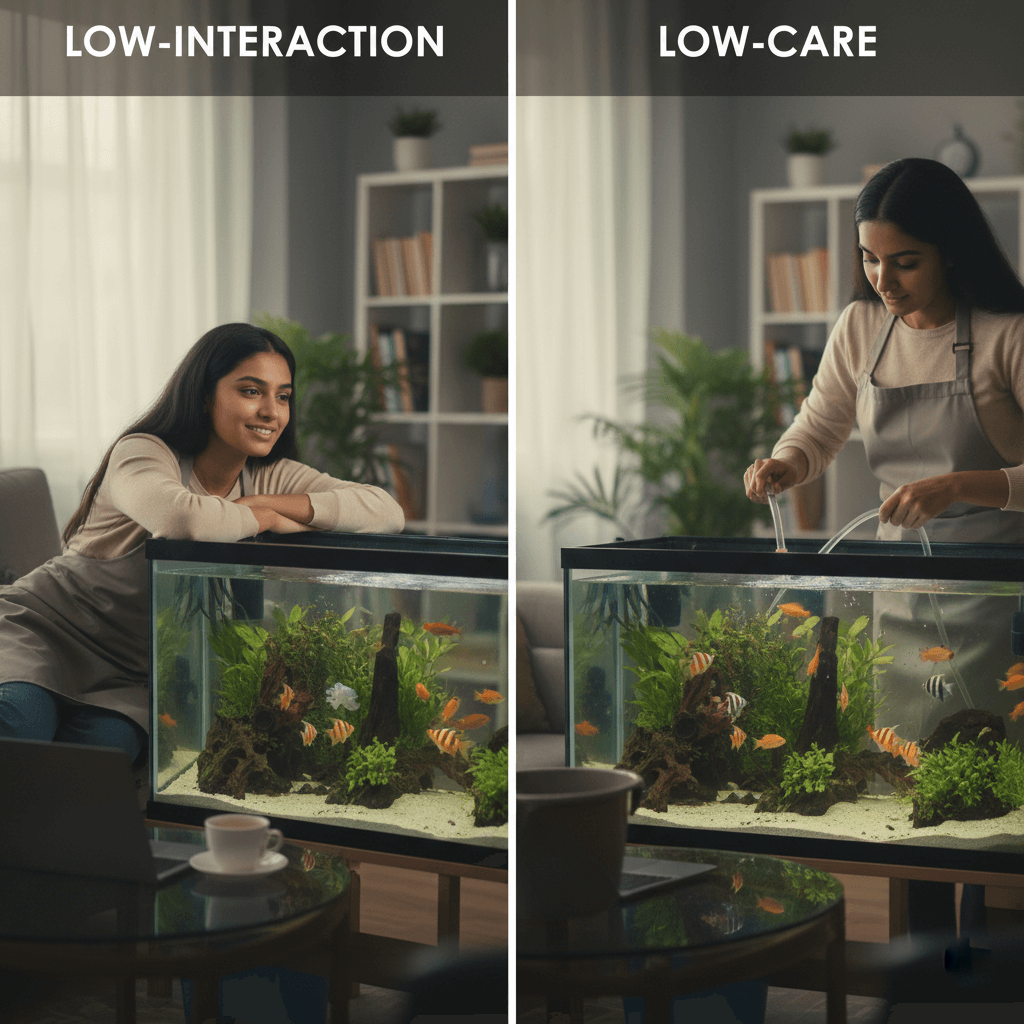
Fish are often called “low maintenance,” but the truth is they are low-interaction pets, not low-care pets.
They still need:
- Clean water
- Proper feeding
- Observation
- A stable environment
Once a routine is established, fishkeeping becomes peaceful and rewarding.
Final Thoughts
Keeping pet fish is a quiet but meaningful responsibility. When cared for properly, fish bring calm, beauty, and balance into a home. With patience, observation, and simple daily habits, even beginners can successfully maintain a healthy aquarium.
Fish may not demand attention, but they thrive best when cared for with consistency and understanding.